Time-series related works
Reconstructing high derivatives of noisy time-series
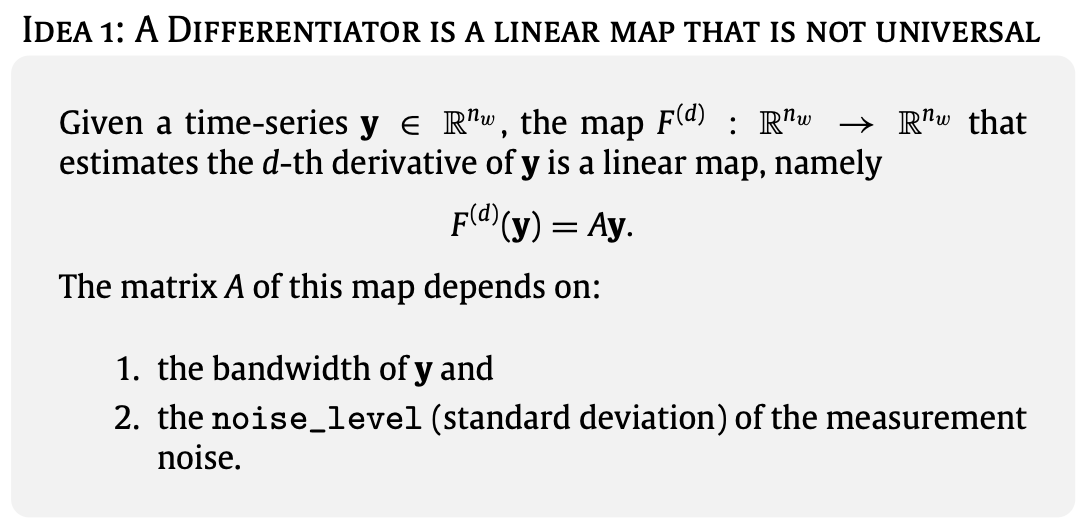
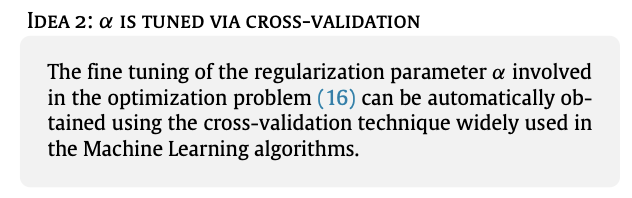
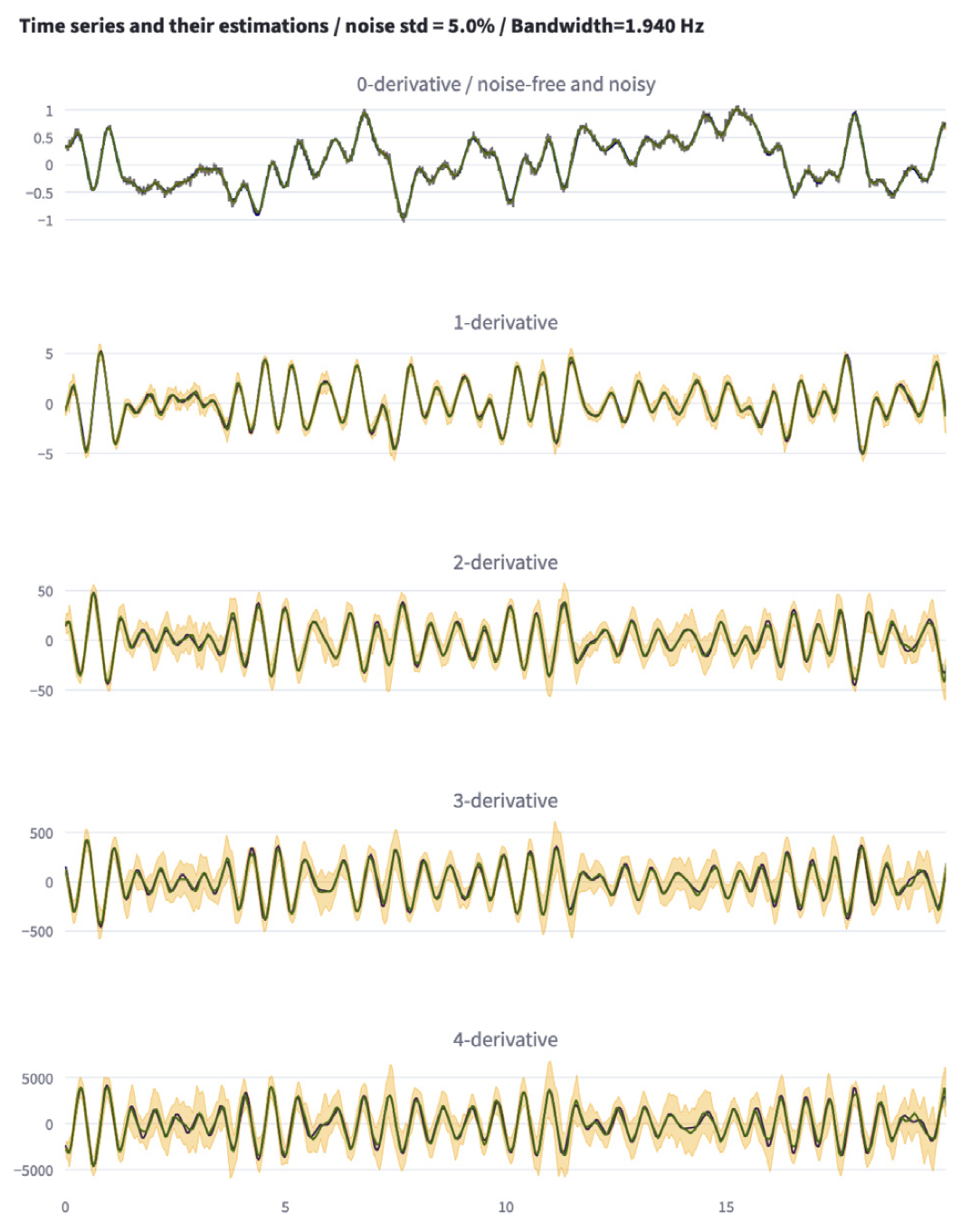
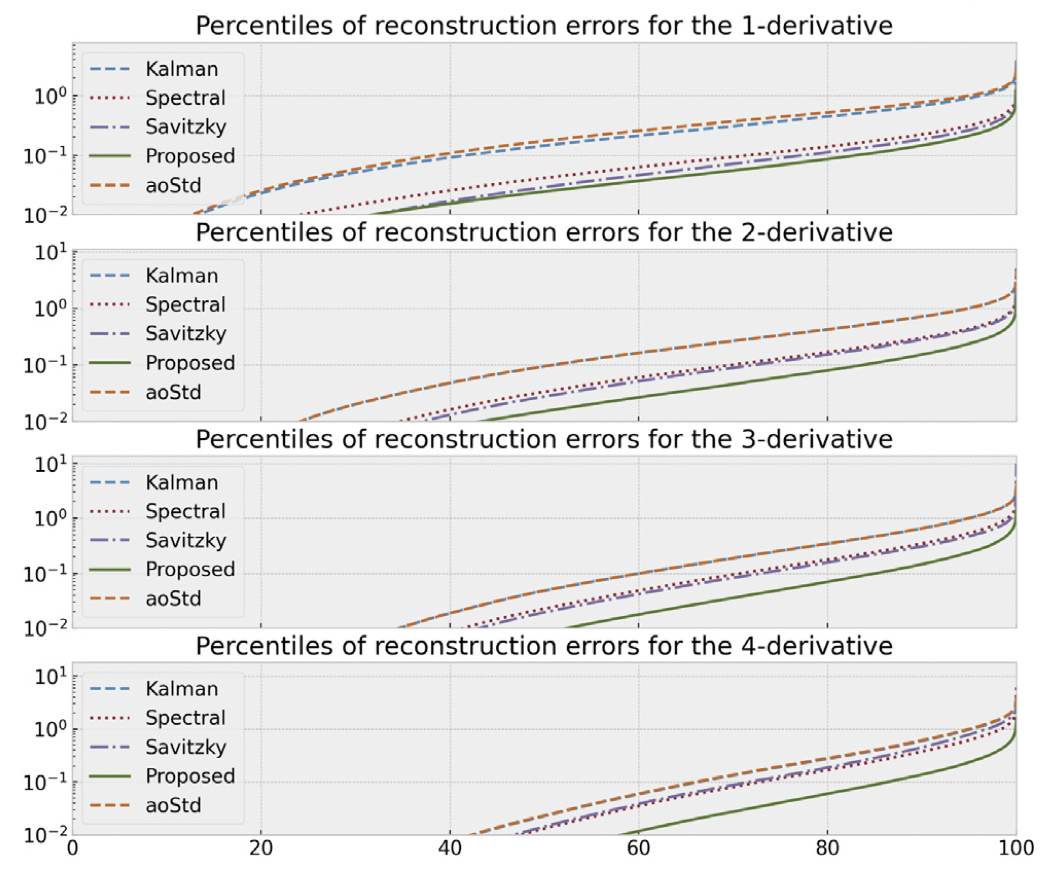
Reconstructing high derivatives of noisy measurements is an important step in many control, identification and diagnosis problems. In this paper, a heuristic is proposed to address this challenging issue. The framework is based on a dictionary of identified models indexed by the bandwidth, the noise level and the required degrees of derivation. Each model in the dictionary is identified via cross-validation using tailored learning data. It is also shown that the proposed approach provides heuristically defined confidence intervals on the resulting estimation. The performance of the framework is compared to the state-of-the-art available algorithms showing noticeably higher accuracy. Although the results are shown for up to the 4-th derivative, higher derivation orders can be used with comparable results. An associated python module is made available via: pip install ML_derivatives.
For more details, refer to the [paper].
Sparse Dynamical Features generation applied to Parkinson disease diagnosis
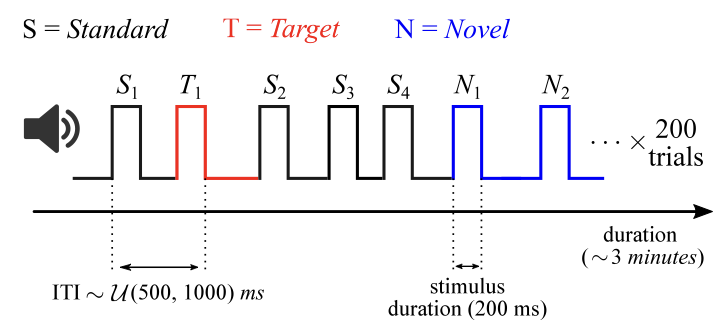
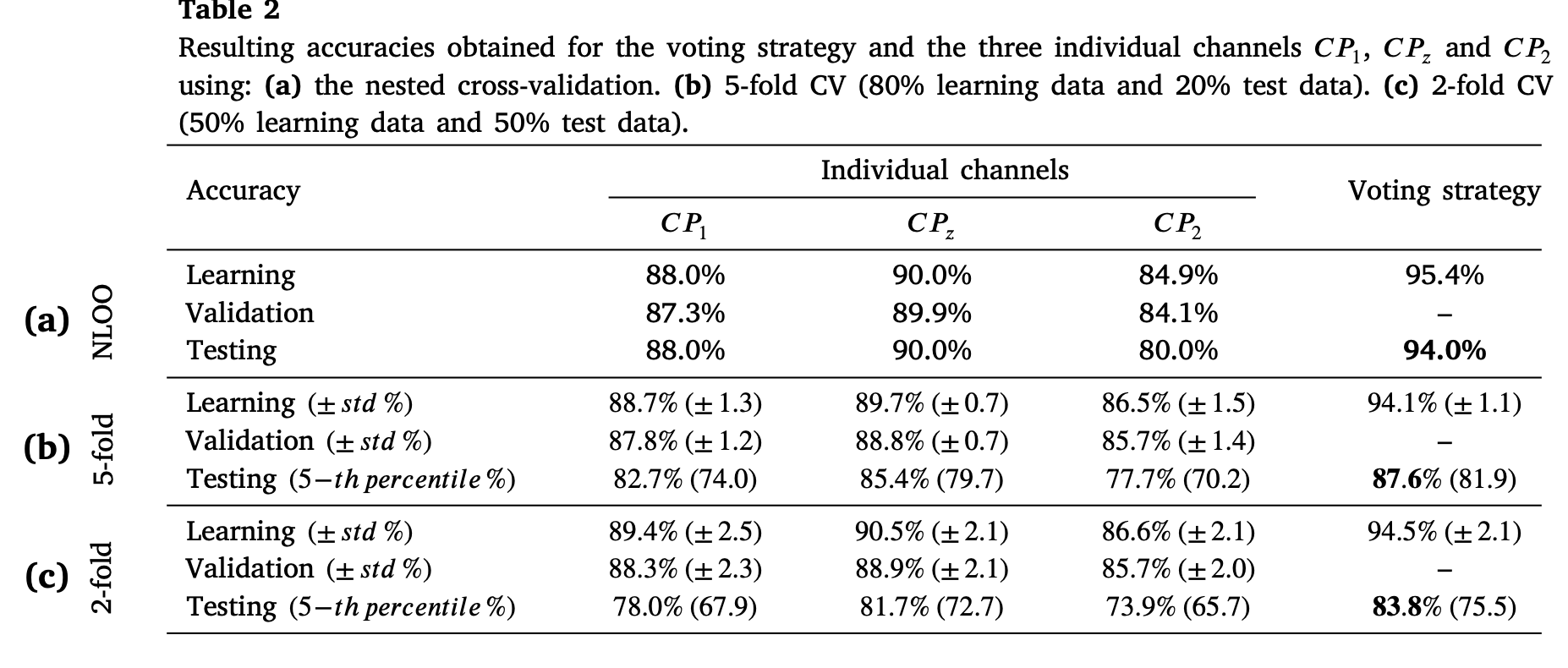
This study focuses on the diagnosis of Parkinson’s Disease (PD) based on electroencephalogram (EEG) signals. A novel approach inspired by the functioning of the brain is proposed, which uses the dynamics, frequency, and temporal content of EEGs to extract new discriminant features of the disease. The generated sparse dynamic features (SDFs) allow, through a transformation, to change the point of view on the data giving access to more informative features that are more faithful to the concept of EEG generation. Nevertheless, the method remains generic and can be applied to any signal but for this application it was evaluated on a publicly available dataset containing EEG signals recorded during a 3-oddball auditory task involving N=50 subjects, of whom 25 suffer from PD. Given the adequate perspective on the data, it comes out that by using only two extracted features from the generated SDFs the healthy and unhealthy subjects are separated using a linear classifier. The classification yields an accuracy of 90.0% (p<0.03) using a single channel. By aggregating the information from three channels and making them vote, an accuracy of 94%, a sensitivity of 96% and a specificity of 92% is obtained. The evaluation was carried out using a nested Leave-One-Out cross-validation procedure, thus preventing data leakage problems and giving a less biased evaluation. Several tests were carried out to assess the validity and robustness of our approach.

For more details, refer to the [paper].