Anomaly Detection
Implicit Piece-wise multivatiate polynomial-based residual generator
Piece-wise polynomials relationships are as universal mathematical structure (Deep Neural Network are special cases as they are piece-wise affine, namley piece-wise first order polynomials). In this work, implicit relationships are identified via sparse algorithm that is based on least angle selection.
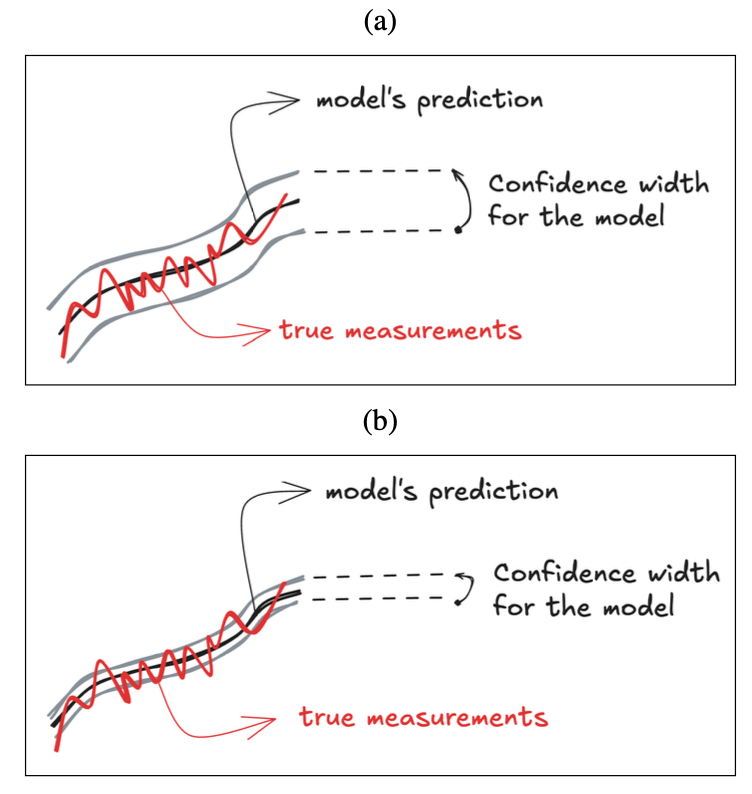
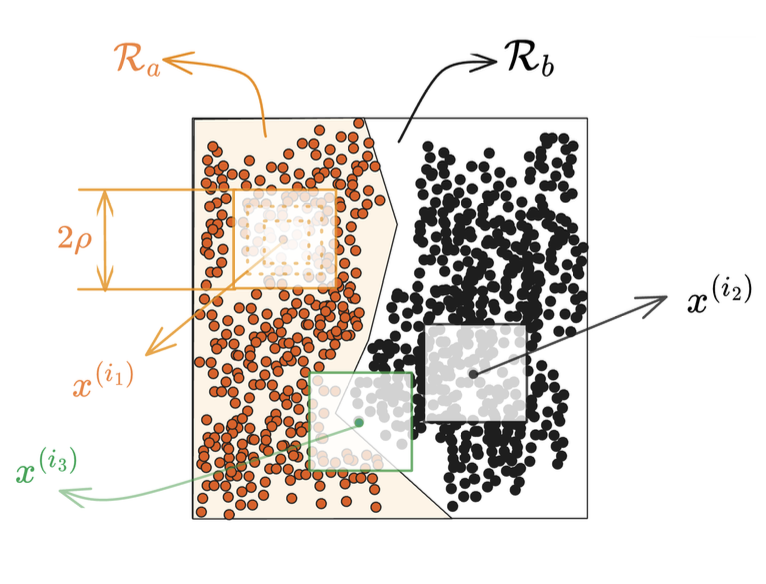
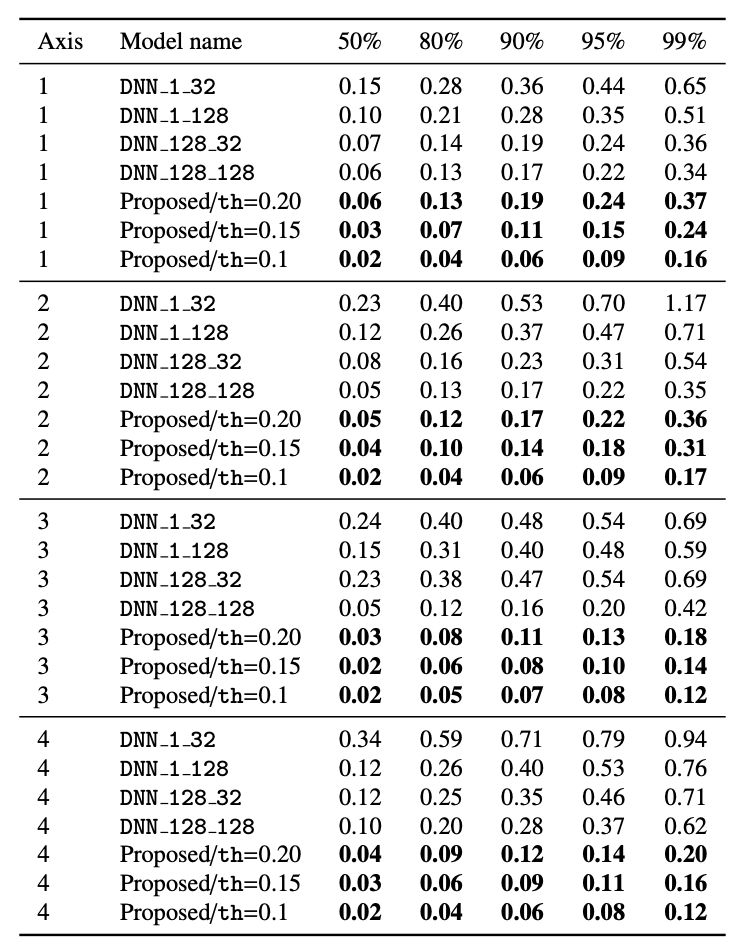
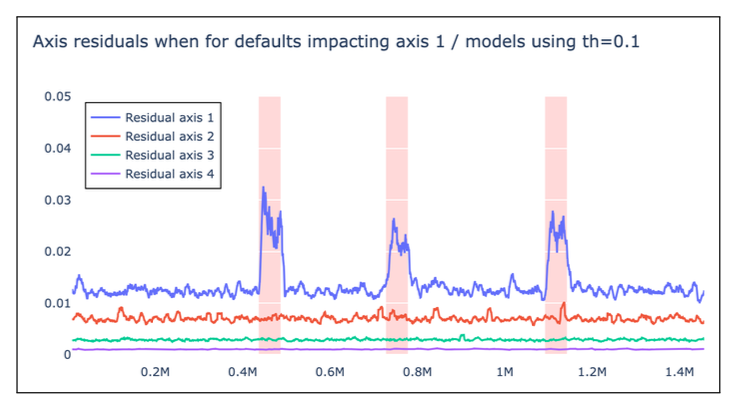
For more details, refer to the [paper].
Explicit Piece-wise multivatiate polynomial-based residual generator
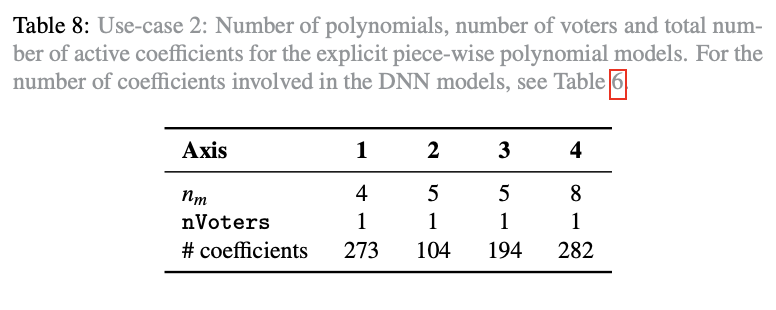
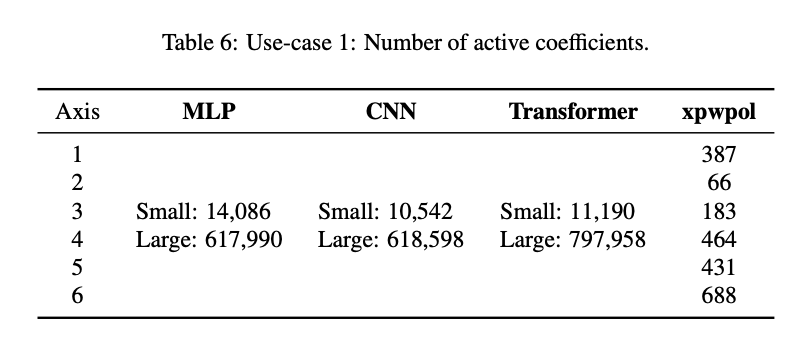
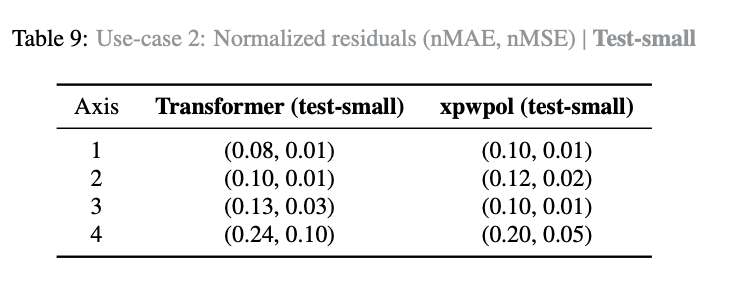
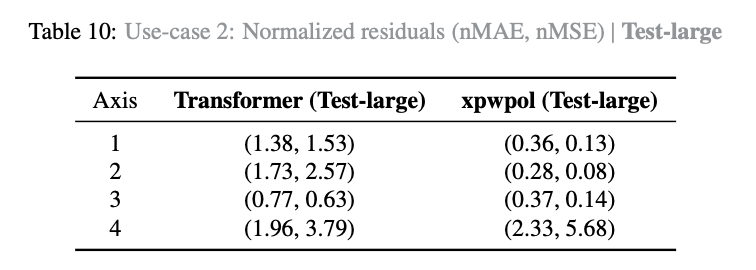
This paper pushes forward the identification used in the previous item in order to built explicit piece-wise polynomial relationships. Application to a 6-joint manipulator robot and another 4-joints one showed the superiority of the poroposed method in terms of:
- Computation time
- Parsimony (number of active coefficients involved)
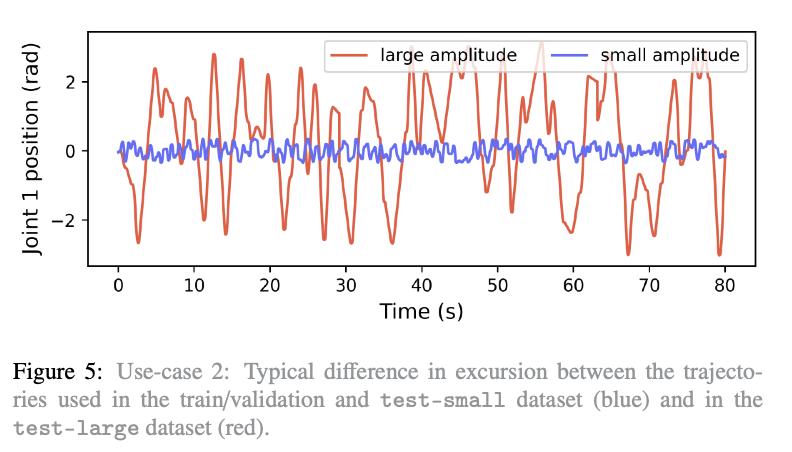
- Generalization capabilities to unseen contexts (tightly linked to the previous item).
Using the set of polynomials identified for the implicit piece-wise polynomial-based residual generator:
\[ e(x,y) := \min_{\kappa=1}^{n_m}\Bigl\vert y - P_\kappa(x)\Bigr\vert \]
derive a features space partitioning such that an average over the predictions of several voters (each associated to a specific partitioning) is used as an explicit piece-wise prediction formulae.
\[ \hat y:= \dfrac{1}{n_V}\sum_{\ell=1}^{n_V} P_{\kappa^\star_\ell(x)}(x)\quad \text{where}\quad \kappa^\star_\ell: \mathbb R^n\rightarrow \{1,\dots,n_m\} \]
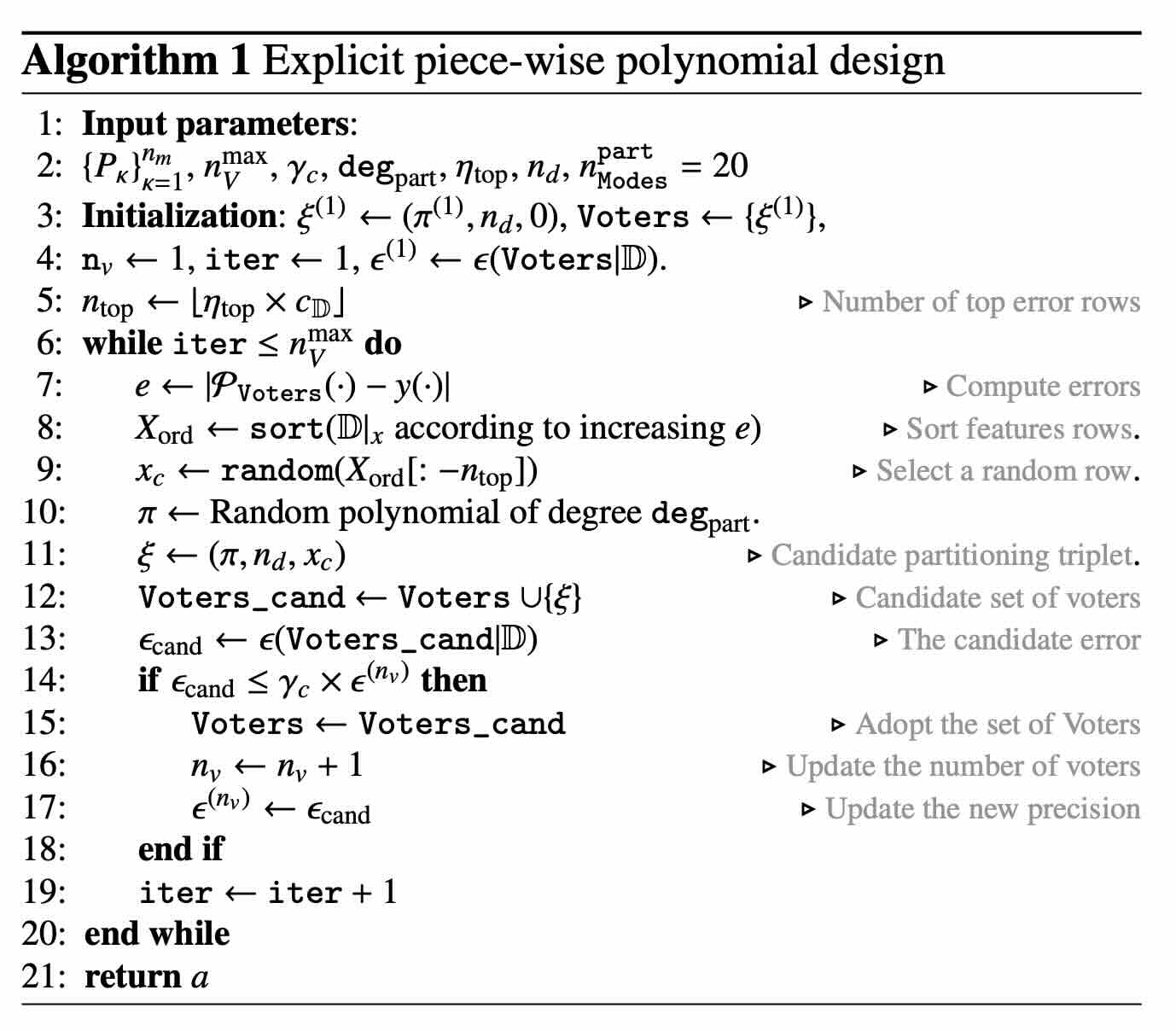
Left column
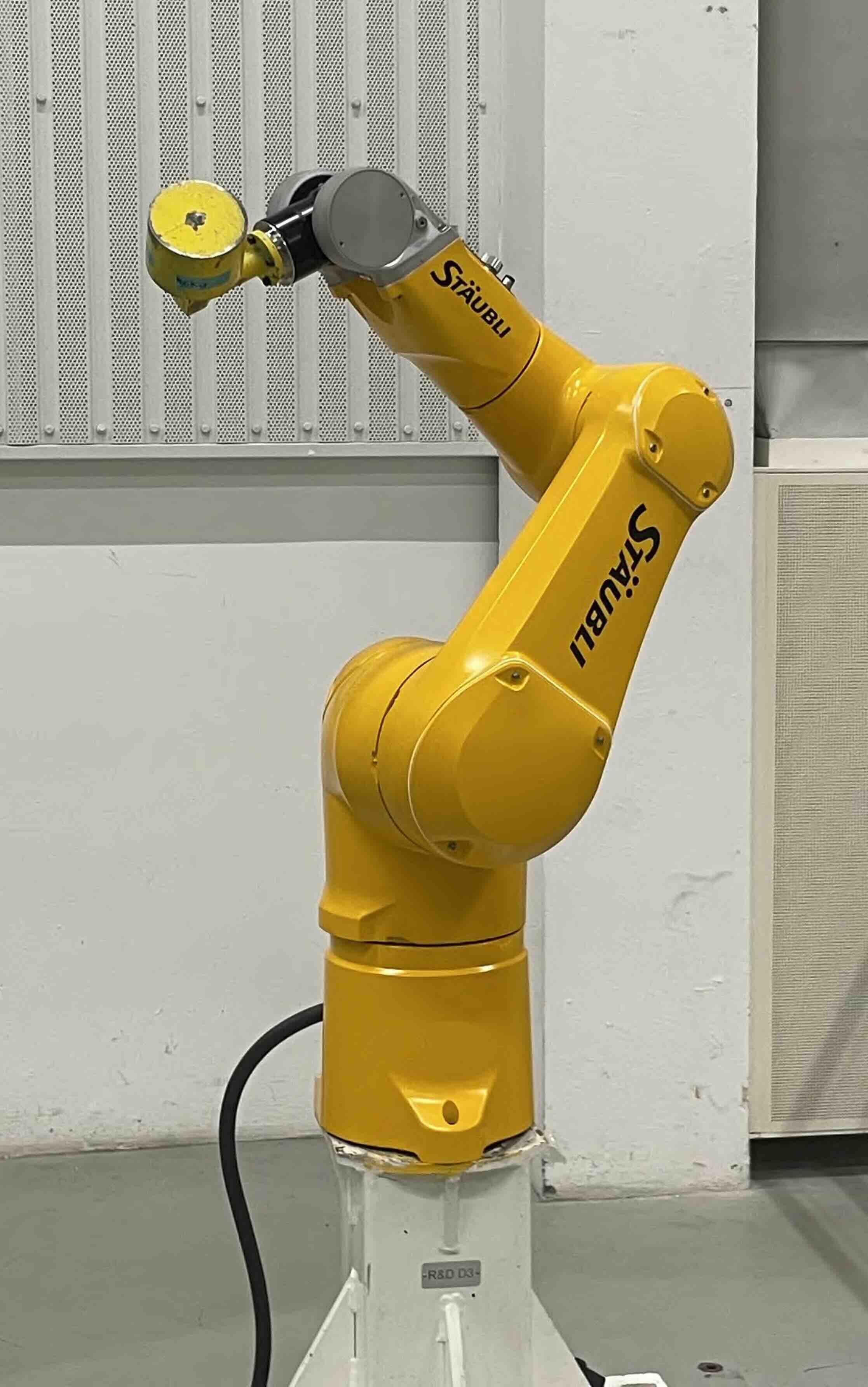
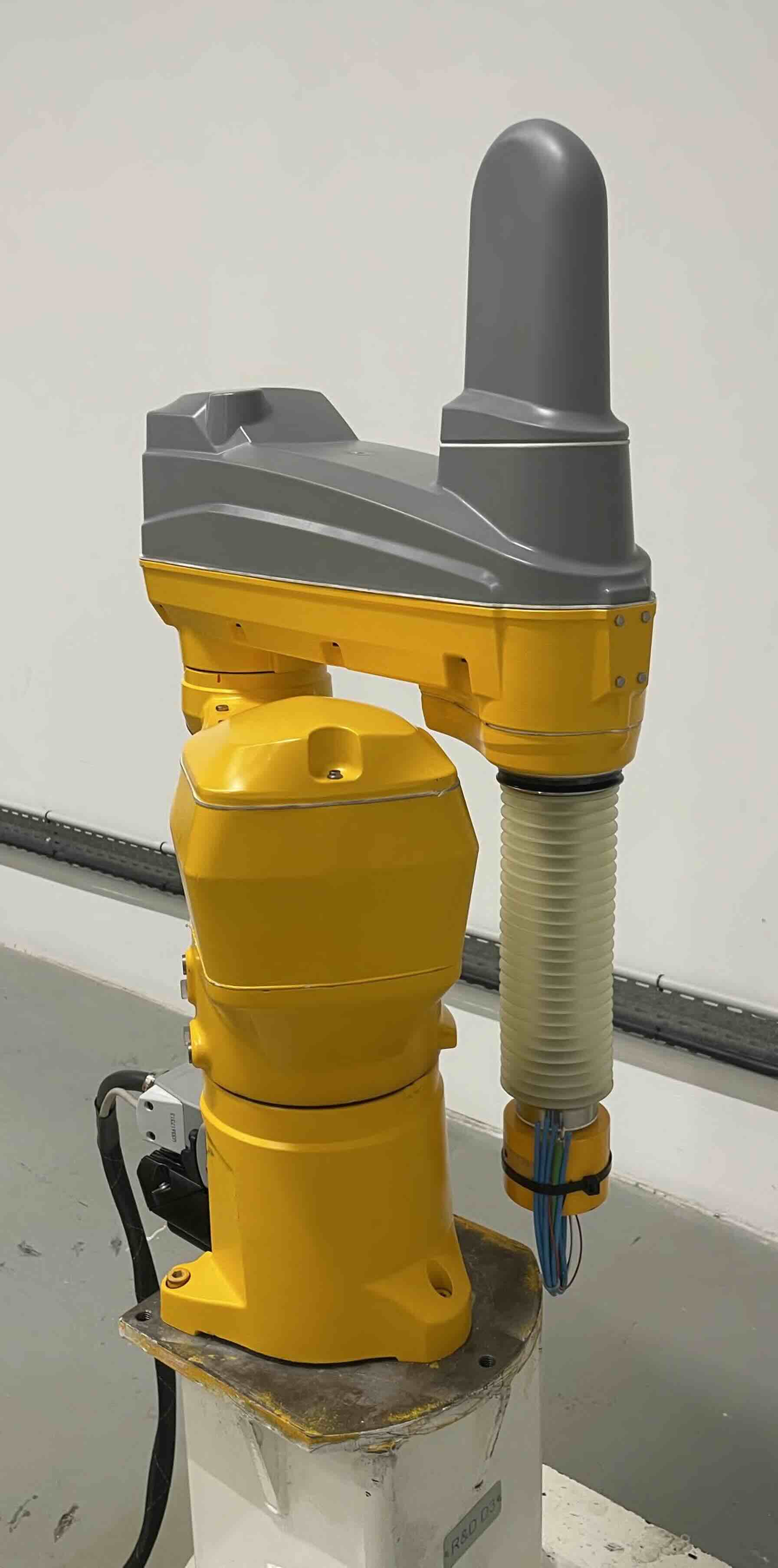
Right column
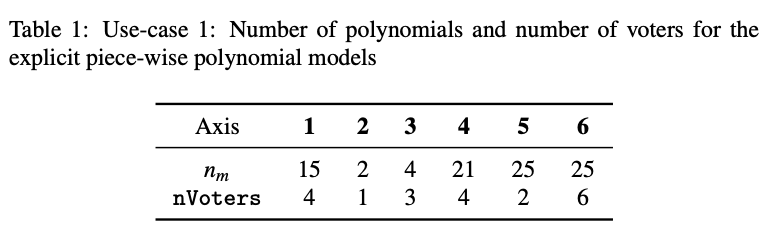
For more details, refer to the [paper].
Mizopol: A python package for sparse identification, Normality characterization and Anomaly detection in industrial time series.
See the [full description] at the dedicated page.
In particular, an interesting example regarding a soon-to-fail detection applied to the Nasa-Turbo-engines dataset is shown in the this paper.